
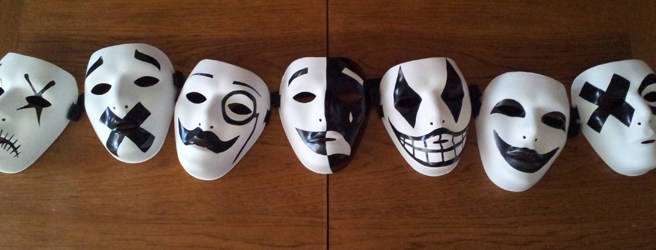
We are all broken, here. What will it take to heal us?
I remember reading Salman Rushdie’s books as a teenager. I really wanted to talk about what I had just read. But his work was heavy and people didn’t actually read him, they bought his books if they were ‘liberal’ and kept them on a bookshelf after reading the first 10 pages or so. Later SR later became a brand for the uber intellectual elite of India and Pakistan. The great thing about him is that he is not idealistic at all. He has no desire to change things or be morally better than the next person. He simply writes about life as it is. I read him when I was a girl living with my incredibly unconditionally loving family. His cynicism would cut my heart into pieces, because he epitomized the materialistic value system. Life isn’t about love. Feelings are for lesser beings. The imaginary worlds he writes about are all a bit mad like Alice in Wonderland. But it isn’t wonderland. More like a hell of clever stupidity and a feeling of disconnection from others. His approach affected the meaning of Indian Muslim and Pakistani Muslim in post colonial literature. Like V.S. Naipaul, he painted Pakistan as the weird people from the Other Other land.
What do you do if you are Pakistani, you aren’t a Hindu hating fanatic, you eat goat meat, and you love The Beatles? You sort of accept that you must be from among the weirdest people on Earth. The good thing about that is that you become more accepting of other people’s weirdness. Or at least I did. Now that I was that weird person who came from the Islamic Republic of Pakistan, with an extra tail and a Koran stuck where my brain was, I felt like I was dressed for Halloween every single day.
People in Pakistan had an incredible amount of judgement about Salman Rushdie-and Salman Rushdie had an incredible judgement about Pakistan. They said he is this, he is that, and he said, they are fascinating!. But me, I just wanted to know, why is he so bitter? It didn’t go down very well. I asked the wrong people, at the wrong time. I was only a ridiculous 16-17 and diplomacy came late if at all. Later in life I empathized why he was so bitter because I found a similar bitterness in myself. Leaving home isn’t easy. Salman Rushdie, I heard left home when he was very very young. I left home too. I mean I didn’t just migrate to family in North America, I left home and went through the search for identity, meaning and self in a completely new country, where people from my country were generally considered very scary….I wonder who was scared more, me or them?
Salman Rushdie won a major prize for Midnight’s Children about partition of India and Pakistan. After the formation of Pakistan and subsequently Bangladesh, more people left the three countries than ever before for a better life. Thus the cultural preservation or freedom from colonization rang very hollow when people had to leave their countries to pursue a better life elsewhere. It made little sense–if colonization was a way to take the wealth, then whatever happened to the wealth that the colonists were after? They took it with them. They created a fabulous world exchange rate system, a world bank and a complete monetary system that ensured that they will have whatever they want from the colonies, and the colonies would pay their weapons industries for the privilege of being free from each other.
We were the mad people that Saadat Hasan Manto talked about in his short story, ‘Toba Tek Singh’. We all got a different type of madness. You need a little madness to cope if part of your heart is sliced off as ‘the other’. I just want to say…I grew up in Pakistan, went to a convent school, with a Gandhi loving grandmother, learnt Urdu, had a pakhtoon father with pakhtoon relatives…and my grandmother sang Meera’s bhajans, but we prayed, fasted, and we were Muslims who ate goat meat and celebrated Eid too. Yet, my parents are fine if I studied other theologies–and when I study something, I take it into my heart, I become it. My examination of Buddism is as normal to my family as my forays into Sufism or Hinduism. Ganesha and Saraswati statues grace my home and none of it means that I am not Muslim enough and need to be taught the right path. My great grandfather was fascinated with religion and my mother would mention her days lost in his library full of books. My family is as Muslim as it gets….1400 years of unbroken muslim lineage or tradition. I don’t think I need to wear Islam on my sleeve for any reason–whether it is fashionable, or a response to American imperialism, or a way to brand, or whatever, my identity is not for sale, branding or political manoeuvring by any politician. I believe Salman Rushdie is as Muslim as it gets also. Perhaps that is why he wrote what he did. He is a brilliant writer, who saw through some terrible things in the sub-continent and wrote books about it.
My favourite book among his books wasn’t Midnight’s Children, it was Shame. Shame was a tragic book about body dysphoria in a misogynistic culture and a moral ethic that had become branded with Pakistan’s version of religion during the Zia years. The book was incredible. I read it over a week of sleepless nights and half asleep school days. Again, there was nobody to talk to about it. Salman Rushdie was subsequently persecuted over another book that he wrote. It was unfair to him. But also unfair to the people who were so immature in their theology and myth, that a little satire made them go crazy. They were very attached to their self-concept of being Muslim and/or Pakistani. To hurt people with words is evil, but to get so hurt because of a few words is also evil.
I dream of a place where I can be free to think, and express without being judged or politically constructed or forced to do stupid jobs that don’t elevate our intelligence as a human species–where our pursuit of wisdom over self-aggrandizement is utilized by people who want to create a new just and beautiful world of peace. Perhaps that place is heaven, but this heaven has to be made here, rather than after death. It is about our higher purpose.
Kindness seems to bridge the gap in ignorance–and empathy seems to help us see eye to eye.
They say that in the modern world, writers have freedom of speech i.e., we are allowed to think. We have no time to think–yet every thought must make enough money i.e., be ‘liked’ for us to live. How can that ever be free? Facebook page like counter is a symbol of our mental chains.
The only universal freedom we have across the world is freedom of judgement. I seem to offend people by having an opinion. And people often judge me because of any random opinion I may have.
Our societies are not free and many have pointed this out. It is true. We are free to be a certain way–embodying a branded consumerist identity rather than actually being a whole person.
People in Pakistan are hung for blasphemy, or threatened with social rejection when they appear to disbelieve in a tight and uncomfortable version of religion. People in America or Canada are crucified for failing to conform to the social ideal of the well-adjusted and productive tax annuity.
No matter what I do, or say, I figure it will offend and dismay someone or the other. Sometimes even walking into a room can cause a flurry of judgements. I figured eventually that I cannot ever get it right. In some groups my being Pakistani is offensive. In others it is not being perceived as Pakistani enough that is offensive. In some groups being a single woman isn’t ok. Or being woman who isn’t a size 4 or between the ages of a-b, is not ok. Other groups are about selling social belonging or healthy supplements, they hug me too much and are too nice.
I wonder if people understand that all the judgements are about their own self-rejection?
The ideal of all the judgements appears to be a calm and balanced person who is normal, of average weight and height, with perfect skin who has her or his life in order. This normal does not exist. If I meet such a person, they often burst into tears, thus negating the idea that they are calm or balanced.
Most people suffer alone. Everyone around us is so busy putting up the mask of the well adjusted person, that they don’t realize that the other person is doing the same thing they are. Putting it on and pressing it into place, so it sticks and looks just like them. But sometimes, reality pops through.
Reality isn’t pretty, balanced or normal. It is suffering, because we all have a self-concept, a self-image and this is our vulnerability.
There is a way out of this suffering and that way is to stop judging yourself and others based on the idea of the self. The idea of the self is a creation of the mind and does not have much truth in it. It is useful to promote certain agendas.
In relationships, the idea of the other who can make you happy is an illusion. People often want the other person in the relationship to give them what they need the most. Love. Unconditional Support. Commitment. These are incredibly high expectations that the other person may or may not be able to fulfill.
I feel uncertain or critical of all external dependencies and definitions of the self as a source of happiness, including job titles, marriage, money, religion and appearance. It makes people attach themselves to a self image–and the real self may be completely different from the image that people try hard to project and have.
When real life comes and shakes the mask, a person goes into pain.”I cried. I shouted. I raged and ranted. She did this to me and this and this.” Whereas, truthfully, you did this to you. Your craving and desire to have something, often an illusion of happiness or success, did this to you.
If we make inner peace our ideal than our state of mind becomes the most important aspect, rather than other people or our self image. If you focus on how you feel, then what others think of you becomes less important.
When you are your authentic self, there is no mask. Judgements don’t matter, because there is no mask.
The beauty of the way of non-judgement is that you get to stay as you are, wherever you are, all you need to remember is the Eight Fold Path. For the eight fold path to work for one’s happiness, there is a preference for solitude, truth, enlightenment and inner peace above approval, success or judgement.
Everything–your appearance, your money, your social currency, your network list dissolve. But if you have inner happiness–something that comes from your practice of self awareness, and personal truth, then you prevail over all the bad things that ever happened to you and ‘happiness follows you like a shadow that never leaves.’ (Buddha)


 Behind The Veil