Why Should I Belong?

To belong or not to belong, that is the question.

How we belong, what we belong to, and what belonging means to us, can become the leitmotif of our life. If belonging were as easy to get as becoming part of a group through joining a company, marrying someone or joining a spiritual group, we would all feel safe. If money made us feel totally safe, we would belong when we had money or success. Our sense of personal safety determines our reactivity.

Turns out that belonging is a feeling that increases when we are affirmed and included but reduces when we feel excluded, judged or bullied. Unless we take leadership and choose our ground rules of engagement, inclusion or exclusion, people will not know what it takes to be included.

If we don’t feel included, we react by disengagement, walling off or anger.  These are the boundaries that helps us create a sense of inner safety. In this tight inner circle, a few select people can enter, but others are not allowed.

Bullying and domination towards a certain group is another barrier to entry. If a certain group is persecuted, then chances are that their group members will not be hired and passed over for opportunities, further eroding trust between different groups.

Which is why, the courage to be vulnerable enough to share one’s actual state is rare.  The courage to be vulnerable is possible only if you have found a way not to be vulnerable anymore or you trust people’s intrinsic goodness towards you or some powerful institution backs your words. 

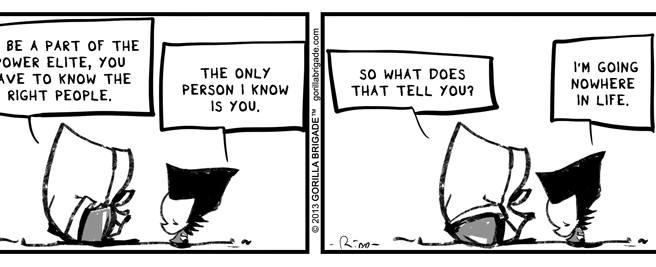
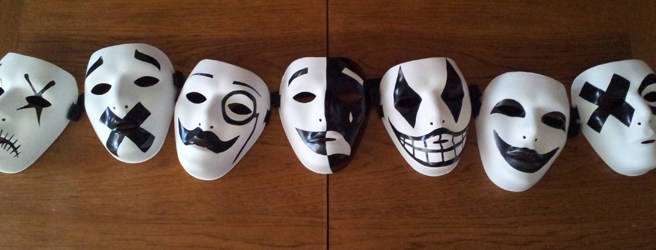
Most people who grow up in brutal cultures, where anybody who is perceived to be weak is kicked around, have to keep a mask on. Otherwise they know that most likely they will suffer for showing their weakness. I had a relative who has since passed, who would never share how much pain she is in, because she knew that it would mean that everyone in the family would get after her for showing her vulnerability. She would hear, ‘why are you sick? stop being sick’ Or exclude her in other ways. Yet, when the mean and tough person is sick, the family has to drop what they are doing to be supportive.

When Dr Brene Brown speaks of empathy and kindness, she is criticized by people who see the harsher reality of existence. Should we molly coddle our young people? should we not tell them clearly that survival is a tough game and teach them how to survive in the face of judgement, criticism and possible exclusion if they are perceived weak?

I don’t have the answer, but truly if this world is only about power and domination, then it is not a life worth living and must be changed. Perhaps being excluded from the pack is a human being’s greatest fear. Family means protection and food. It can mean survival in harsh conditions. But often family is the reason why cultures stagnate. Instead of supporting a family member to pursue their dreams, family uses guilt and belittling. Our well wishers tell us to conform and become bullies ourselves because that is what works.

But, what if unequal freedom is NOT what we want to have?. What if we don’t to lord it over others just because of our privilege. What if we believe that freedom isn’t possible without equity. That financial freedom is not and never can be real freedom.

Then we have to be brave enough to be the change that we wish to see.  Then we have to live by our own independently formed rules. We are, therefore we think.

“I learned that courage was not the absence of fear, but the triumph over it. The brave man is not he who does not feel afraid, but he who conquers that fear.” – Nelson Mandela.


The Lighthouse

As long as I can remember, I have hated barriers of any kind. In school the authority of a teacher felt like a wall. Gender inequity felt like a wall. Race felt like another wall. I saw the world as a series of walls. Borders. Education. Age. Gender. All those walls were there because people were too afraid of the ocean. And I had to try navigating that ocean. The wall crept up slowly. It started when the ship of my life broke in the middle of the ocean. But I do not regret that it broke because the cracks were already there. The breakage started by being the person people wanted and expected me to be. It started by looking for affirmation instead of trusting in my own individual self. The day that it completely broke was almost a relief, because it meant having no choice but to do the right thing, instead of trying to be someone else.

The way is not a path that takes us from a place to another place. The way appears when we take a stand. Sometimes we have to take difficult stands for so long that we become like lighthouses.

A mound of sand and broken pieces of me, had piled up after the ship wreck. It took time to give it form. My new wall was a wall made of make belief and whimsy. Time passed and the wall became thicker and thicker. While the walls outside me became less and less relevant or rigid, the wall inside me grew. It kept out the debris of the ocean. Taking a stand can be hard, but in time our stands become everyday facts about us.

One day a wall completely encircled me. A ground had formed beneath my feet. One can become the home that one seeks. One can become the space that one wants to inhabit. One can create belonging where none exists. Birds do it all the time. An old button becomes a luxurious armchair for the perfect nest for a bird.

The lighthouse fulfills its purpose not by finding safe harbor itself but by creating space in the middle of the ocean to help others find safe harbor.

The lighthouse arises because of the ocean. Our job is not to avoid the ocean or find easy ways to navigate the storm, but to merely exist as ourselves.


The Path or the Whorl?

The positive psychology movement has created a monster. This is the false positive persona. I am better than you because I am not broken.  The facts are that we are or have been broken, all struggling and nobody has got it all figured out. The more vehemently we practice our ohms, our yogas, our namaz, our positive psychology, the more clear it becomes just how broken we really are but choosing crutches to get by. And I say here, drop all the robes, the masks, the pretenses and love what is broken.

Adler, the most known thinker around positive psychology and Patanjali, the great yoga guru had more in common in our new age world than perhaps either realized. Adler felt that the need to be superior to another was actually a sign of mental immaturity. Somehow a person who wants to prove their superior strength, ability or looks were stuck in child state–and desperately needed the unconditional love that was denied in childhood. Desperate to please and meet the approval of authority figures, the adult child looks for approval–performance is one way to subconsciously gain the love of parents and family.

Patanjali didnt use a conceptual story in words. Instead he spoke in how the body feels using the language of poses. Yoga poses tell the story of the psyche and ask the body to release the emotional pain of rejection (hunched shoulders), fear of survival (tight hips) and all the other ways that the body holds stress.

The greatest benefit of humanism is that we can accept our shared suffering and learn to cooperate to then have a relatively stable and peaceful society. Or, must we in our immaturity blame our neighbour for our suffering?. It is true that we lose out on some opportunities because of other people, however we also gain opportunities because of them.

In the same way, our sorrow, our broken parts have value. Our broken parts tell us our limits. Whether our pain comes from health issues, family, people, money, childhood, we have a gift that we can use to decorate our life with. Our limits not only tell us about ourselves but also about other people. How people react to our broken self tells us about how broken they are. We live in a self oriented world and we are often alone. Maturity demands acceptance of the human condition and becoming okay with it.

Positive psychology tells us that this is not so bad and that our attitude can bridge the separation from other people. Positive psychology tells us we have choices-but, we can only execute them to the extent of our mental maturity. If in childhood we were over controlled, we were not allowed to think for ourselves, if every choice was done for us, if our mother and father made us into their projects, we will struggle to make independent choices. Positive psychology teaches us the value of letting your children be, to not turn them into perfect little anything and to let them make mistakes. Mistakes are not about failure, mistakes are about learning what works and what does not work.

A long time ago, I stopped expecting to live a perfect, mistake free life. I realized that I like making mistakes. I like living my own life. I like having dirty dishes that I wash after I read an interesting book and think through a fascinating idea. I like having hair that I never have to dye. It frees me from trying to get approval. I like not having to have perfect skin. I live my life as if it belongs to me, but I respect people who take interest in my journey and support me in pursuing my dreams.  I love my hairdresser who totally gets me and gives me the most amazing haircuts that are NOT about presenting me as a pretty girl, but as myself.

I don’t know if I will ever win the lottery or become a millionaire. I don’t know which disease will kill me. All I know is that it won’t be the disease of living a lie.

Positive psychology is not afraid to make mistakes, because mistakes are the necessary price of action. Positive psychology creates leaders and losers and those roles are interchangeable. But, perfectionism creates people who can only do what they are told to do and they are so busy getting it right, that they miss out on their life.

The price of finding myself was steep. It cost me a lot. I am still reeling from all the stuff I had to get rid off, to dig out the person that was trapped under the ruins of a socially acceptable life that did not fit me.

So, what’s positive about that? There are two ways to live life. One is to go around and find the life that fits you and get it. I did not find it. In the world I came from it was unthinkable to support a woman to find the right life for herself. I was asking for too much. I was expected to cut out all the pieces that didn’t fit in the world, instead.  It meant living unconsciously. I tried it but could not pull it off. My mind would think and I would explore. I was  curious. Bullying only made me want to run away. The other way to find the life that works is to make it yourself. That is the most authentic path–and Carl Jung would agree that the true path is the one that makes you, more you, instead of diminishing you and making you invisible. In this kind of path, you need to make decisions. You can’t hide behind other people. You have to know what you want. You will need to figure it out yourself.  That sounds scarier than it really is.

There is a terrible myth that the safe path is indeed safe. It isn’t. Say you settle but if you force yourself to fit in, there is always frustration and if you want any kind of happiness, you need to be yourself, so sooner or later, you will want to breathe. I never wanted to be a victim. I didn’t want to be that person who complains all the time about her life. I like creative pursuits, and if I am busy crying all the time, then how can I do anything, unless I get other people to do my shit? Writers are highly advanced and interesting complainers.

In actual fact, all paths have challenges. Safety can be sad and independence can be lonely. So why is it that I am here, but you, my friend are there?

Robert Frost may have expressed the dilemma well. But the truth is that the road is never a straight line and it never connects like dots do in coloring books. We never know where our choices will lead us. As time passes, I find that the idea of the linear path is a myth. Because isn’t life more about living in the moment, rather than a series of choices? How can we know what will await us at 30, 40, 50, 60?

Hafiz, knew something beyond the intellect when he said, ‘This place where you are right now, God circled on a map for you, our beloved bowed here before you arrived.’

We think we are in control and that we have something to decide. We ruminate and cry, but our destiny is already written in our cellular memory. Our story was begun  aeons ago. We are blessed if we are able to witness it without prejudice of our ego who judges us far too often. Can we change our story? Yes, I believe we can, but we have to first embrace our truth, only then can we choose differently.

The truth is that our mental unconscious beliefs and programs are choosing our life. The path is the whorl, and our job is to witness the labyrinth of  choices we make because of the beliefs we hold deep in our being.

And if you really want to make something out of your life, you have to be willing to be broken open.


Your Name, Inc.

The evolution of technology and our financial system means that each one of us is like a mini corporation. The financial system that we all live in already treats us like a lump of money. Just like how annuities like life insurance work– you deposit a lump sum of money, and some company agree to pay you a guaranteed income for a set period of time — or for the rest of your life.  Our skills and abilities are like an investment sum of money that makes us money and tax is then sliced out of it.  How much somebody is worth depends on market conditions and their ability to negotiate in the system. On the other hand, our expenses are the things we spend on.

Because of technology, this concept is going to become more and more in our face. Just like social media forced each one of us to learn how to act like a media company or hire someone to teach us, block chain technology will go one step further and eliminate even more slack. Dubbed the Internet of Value, blockchain is going to change how we record and exchange value. Block-chain is already used to generate crypto-currency. Bit coin and hundreds of other currencies are becoming more and more popular. In time currency as we know it will no longer be tracked by a central authority, like a central bank that controls the money supply. Instead all currency will be maintained via a vast network of computers.

Just like credit card payments changed our relationship with spending, blockchain will do that too. For example, right now youtube views do not in and of themselves generate money. Money comes from advertising revenue or sponsorships. With blockchain, the possibility exists that page views instantly convert to value that is then exchangeable with actual things. The speed of connection as well as the value of connection will both become economically tradeable.

In the past technology has changed how we look for satisfaction, as well as how we engage with products or services, and what we pay with. Hypothetically speaking, the amount of time that we spend on facebook, going through news feeds and friends posts is a potentially economic activity that can be monetized and generate money.

Social media changed our definition of work versus social time. Now anybody who wants attention for their product, looks into social media. Anyone looking to sell their books or ideas tries out social media. Social media generates a huge amount of revenue even though it is free for users. The demarcation between free and paid is going to be more fuzzy –it has already become fuzzier for reasons that I will talk about in a separate article.

Blockchain implies that many of our activities can create value for us in a variety of ways. There are many possibilities for blockchain applications and crypto currency is just one of them.

The changes in technology means that each one of us is going to have to act like a mini corporation. We will have many possibilities for earning an income. Our free time is going to be under more pressure than ever before. If ever there was a time that forces each one of us to understand who we are and what we want from life, it is now. Given the near constant pressure to create wealth as well as the matching pressure to spend it, we will feel generally feel more psychological pressure. Our threshold of happiness will be higher, even though the number of people we are competing with for the same happiness is even more. We will act in more selfish ways, maximizing our personal gratification and since this way of living is psychotic, we will turn to religion and spirituality to soothe our near constant sense of separation from each other. We will reach desperately to find our tribe and yet feel more isolated than ever before, as the conditions of belonging to any tribe will be ever more stringent. In our hyper connected world where connection is value, our sense of belonging will be even more conditional to the kind of value we are perceived to provide.

We will rely more and more on our devices and the reactions of complete strangers to live, work and belong. Our world is going to get even more psychotic than it already is. If there is hope it will be that we realize the value of authentic friendships and real connection.

This small device–just a phone is our most reliable companion. People criticize phones because they separate people. When most of us are so broken, the only person who would want to spend time with us is a phone.


Which Career Is Right For Me?

I have had 7 careers. No wait, add the hobby careers–the score comes to 14. Then if I add all the courses I took for fun…the number would be around 20. The reason is that I am terrified of becoming unemployable. I like to keep my options open. The pace of knowledge creation in a hyper connected world is so fast, that any new knowledge becomes redundant in weeks.

Physical convenience has so far been confused with happiness.  We assume that If we have more stuff, we are bound to have more of everything else–such as emotional connection, love and family. I am not so sure that owning things is the only way to have fulfillment. Despite more people than EVER before in history getting post secondary education, there is a real scarcity when it comes to reflection and depth, because google does it for you. It seems that jobs are shrinking and educational demands for the shrinking jobs are getting higher and higher. Large numbers of people globally suffer from never good enough i.e., Imposter syndrome and loneliness. There’s more general convenience and wealth, but it doesn’t feel like it matches the deficit in security and human connection.

If you have read until here, you are probably thinking, but whats the point?

Joy is present only when it is truly felt. It is not an outcome of a self aggrandizing achievement. The kick from posting your coolness on facebook, the pleasure from snagging that cute girl for a one night stand, or winning the lottery, or getting a 4.0 GPA doesn’t last–because that kind of trip puts MORE pressure on the self and a greater sense of spiritual separation from others. Successful people therefore are NOT necessarily happy. They may have a sense of self importance, but since when did importance create joy?

When people who constantly feel not good enough, look at their selfie or the mirror, they dont usually feel joy–o look thats my face. They look at what’s missing.  I remember looking in the mirror and wishing my cheeks were flatter. Or my hair was straighter.

I can’t begin to express the joy I felt when one day I looked in the mirror and instead of looking at my physical flaws, I saw me as a person. Someone I could be proud of.

My sense of okayness did NOT come from my finances. It did not come from my size or if I looked young. It didnt come from my intellectual abilities. It wasn’t about some gorgeous hunk whispering “I love you” like Salman Khan, making me feel worthy.

No. The sense of okayness came because of the stand I took for my values. It didnt matter if my eyes were wrinkled. or my skin had freckles. What mattered was that I was me, still here.  Otherwise the post modern world takes us all and crushes us, kills our spirit, makes us apologetic for feeling awful about being rapidly taken over by computers. I still sell my time and skills, I have no choice, because entire financial system is about selling either time or product and we all have to sell something. Whether or not I sell something, I still have to buy. Because of the layers of leverage in the system, regardless of whether I sell something. my data is worth something…my email has some value, my computer stores some cookies–plus I am connected to the network. Whether I make money or not, for an Internet company I have value–this value is why blockchain technology is going to make a lot of money for some people who get it.

Most people dont realize what they are doing when they join free platforms like facebook etc. They have no idea that they are making a few people extremely rich by giving them their data. They have no idea that companies like facebook or google, are going to make millions and billions of dollars over the next few centuries, because people like you, you, and you decided to sign up with a free profile to show off in front of your friends and keep in touch with people you don’t even like.

So here we are, the hardworking middle class. And there they are the millionaires. What’s the difference?

I personally know people who had business ideas at least as good as facebook. Why did facebook make it? there are hundreds of wise pundits analyzing these things,’ Why Apple and not RIM?’

Because, “Everything changes, nothing is without change.”…..Gautama Buddha (2664 years ago).  It is not about you, and also not not about you. Suffice that you are an observer, and it is your choice how you observe. This is our existential freedom.  So quit looking for yourself in the identity creation of a post modern consumer world. You will just chase a shadow that takes you to Neverland to the lost boys.

People who stay comfortable with change. People WHO DO NOT ASSUME that today or tomorrow can be, should be, will be the same as yesterday….are the wisest people on Earth.

Homework: Write the above quote a dozen times. Think of the last time, something unexpected or unpleasant happened and how you felt and acted. Were you afraid? angry, out of sorts, grief struck?. That most painful, most vulnerable place of total horror is where your greatest wisdom–your lotus blooms from. So stop running away from the discomfort. Stop being afraid of it. Let it remain sticky and messy. But don’t let it define you. 

Career Advice for the coming years:-

Your job is not to create and maintain a perfect life with a great job. Your job is to flow with change. Say yes. Take that trip. Take a course. Spend on professional development. Talk to people you meet at work and keep connection alive. It isn’t just about the job, but about you keeping yourself engaged in your career. The way technology is evolving, individuals are turning into mini corporations.

The evolving truth of our post modern life: You are always out of a job. You are always in transition. You are always aiming for a better career. There is always a better job. There is always a better competitor. Individuals need strategy, the same as a business.

To answer the question, Which Career Is Right For You?…..They all are. Anything you want to do is right for you. If you cant motivate yourself, than no career is right for you.  Your desire is the key here.

About me: I am a meditation coach, who believes that mindful living and mindfulness meditation holds the answers to the discontent of post modern life. We do not need to varnish the truth or rely on the charismatic lies of sociopaths to solve our problems. Complaining and venting wont help–unless someone pays you to do it, it is not skillful. What helps us face change is developing the deep resilience that comes from mindfulness practices. You deserve peace, even in the face of flying shit around you.

Visit http://www.saimameditation.com and sign up for the newsletter for developing resilience when facing change with meditation tools and techniques.


The Emptiness

He was a simple man intellectually. A dreamer. A bit artistic.

I was a complex person, with many sides and facets and nothing about me was as it seemed.

But both of us were romantics. I could create dozens of stories in my head and he could watch stories all day and all night. We were actors and thus we could create fantasy out of anything.

I was his Sheherzade. I captured his heart with my stories, my craziness and my imagination. I knew he loved me. But I?

‘You never loved him,’ a friend whispered after the divorce. Not loving him didn’t mean I wasn’t broken. I was broken. Amputated. Snapped in two. Disconnected. Not myself.

But it is true, I never loved him. The man I loved never existed. Who I loved was a hero in a bollywood romance. Salman Khan playing one of his devoted lover roles. But I wasn’t the kind of girl he chased in the movies—a domestic doe. I was the kind of girl who runs away from marriage and family.

I was a girl who didn’t belong with her society. I was a girl going through the motions of normal life.

I did all the socially expected and desirable things, yet through it all, through the exciting bits, love letters, presents and kisses, the degrees, jobs and pregnancy, my heart was empty. My heart belonged elsewhere….it flew with Jonathan Livingston Seagull, it cried with Ghalib, it wrote with Parveen Shakir, it danced with Meera who was so in love with Krishna, she forgot to be a wife.

Later, when all my various attempts to find happiness in the world of men and things had failed, Buddha’s smile came into my life. My closest friends and exes brought him to me. A bowl. A book on Zen. Allan Watts. Buddha statues. A Buddha picture. I think deep down anyone who has loved me has known that my true love isn’t them. Every time someone transgresses the invisible wall, I feel so suffocated that I will do anything to find my inner space again.

After my marriage ended, I felt like someone had ripped out my heart and its place there was a constant aching emptiness, in time the aching left, but the emptiness never did. It is my truest companion. It was the gift he gave me. So, when someone comes along validating me, praising me and wanting to spend time with me, it feels wrong. Just plain wrong. Anybody who has been through an abusive relationship can probably relate. That part that’s broken can’t feel anything except self loathing.

All phenomena is empty, devoid of substance, Buddha said. It was true, but I needed to know that for myself before I sat down on the meditation cushion, exhausted from chasing happiness in form.

Nothing I achieved fulfilled me.

Nobody’s love filled the emptiness inside.

My literary companions’ words were the only solace in my life and then there was Buddha.

The truth was that I had been living someone else’s life. A conditioned life. A normal life because it was safe to be normal. A life based on the exteriority of me. That life had nothing to do with me.

I lived the life of my parent’s child. I lived the life of my husband’s cute wife. I lived the life of my employer’s reliable employee. I was my best friend’s eccentric friend. I don’t think I was actually me until the time I started to meditate and connect to that part of me that was the real me.

But the real me wasn’t loveable. I wasn’t cute. I wasn’t funny. I was a pain body that had not learnt as yet how to stop hurting. Very few would want to love this emptiness. But I learnt to love her, bit by bit. I let her, the real me, enter my life. First with baby steps, then bolder, I stood up and became the authentic me. It was a slow love affair, I took my time. The causes for depression can be very complex and span generations and each step that leads to freedom can be herculean. I accepted my face. I accepted my hair. I accepted my body. I accepted that my body changes.

The other day, when I did something goofy, and the most interesting man in my life laughed spontaneously from his heart, my heart stopped. My body trembled. I knew it had gone on too long. I had to run before he saw the emptiness behind the smile. I don’t know what he would do. Whether he’d run or bring me closer. All I knew is that my emptiness wasn’t as empty as I need it to be to be emotionally safe.

Self-help is full of good advice. Learn to love again. Let go of the ex. Let go of the pain. Go with the flow. Self-help gives trashy advice. It is cliched. It is a $19.99 lie. Somebody’s making a living from telling how you ‘should be’. It doesn’t work. It makes people guilty about not being cool or happy.

Here’s the truth. If you’ve been hurt in the past, chances are you will get hurt again. If you’ve broken up over an issue, chances are you will go through that again. The only thing that can change is how you conduct yourself when it happens. We are trapped in karmic cycles that are near impossible to break without serious effort and coaching. The things that changed for me during the healing journey were very small. My victories were so tiny. The next time someone tried to force himself on me, I was able to kick him in the crotch.

The next time someone wanted to marry me so he could move into my house, I broke it off.

The next time a married man came on strong, I was able to freeze him with one look.

And finally, the next time, there was no next time, but only a deep sense of now.
But all this came about because of the emptiness. The emptiness is my source of strength. It is my vaccination, from the disease of wishing things were different.

Quiz: Are You a Pakistani Elitist?

Do you have what it takes to be a true, devoted Pakistani elitist? Or, are you faking it? After much scanning on facebook pages, for various characteristics of the average Pakistani, my software came up with the following characteristics of success. Have fun:)

Answer Yes or No to the following questions.

1.You practice yoga, but you make fun of Modi doing yoga.

2. You travel the world, but you tell everyone Pakistan is the best, with your second or  third citizenship tucked away

3. You hate America, but your real money is in US Dollars or British pounds.

4. You routinely hide your real political opinions or better still don’t form any. You know that life is about saying one thing, but doing another.

5. You talk about how great your religion is in terms of equality, but that doesn’t mean that you actually pay a decent salary to your domestic help.

6. If you are a man you go abroad to find girls for your extra marital or pre-marital affairs, but you find a wife at least 10-15 years younger to settle down with.

7. You dislike intellectual feminists and opinionated women, because you are sure they have some kind of agenda, and you stay away from radical thinkers unless they blame America for everything. Pakistan is a victim of global conspiracies for oil. There is no gender issue. There is only equality. Even if there is a problem, it isn’t your problem!

8. You support Pakistan, that is why you only share positive things about it on your facebook page. That way you avoid every controversial subject and taking serious political interest. You are so good at the art of the superficial that everyone is your friend. You never know when your network will be required.

9. You at least have 4 children before you stop.

10. Since you long since figured it out that the only way to live in Pakistan comfortably is to support the army or Nawaz Sharif, until such time that PPP gets its dynasty together, you make the best of the situation.

11. Your children speak better English than Urdu, yet you make sure their values are grounded in being Pakistani.

Mark 1 for every Yes.

Score:

9-11: Royalty. You are an elitist to the core. Pakistan is where it will be for you, now and forever.

5-8: Well-connected. You have it very good in Pakistan.

4-7: Working class professional. You see how the royalty and the well-connected live, but you aren’t sure if your values entirely synch up. You can’t see the old ways surviving much longer. You may be an activist for PTI.

0-3: Faqir: There’s no other way to put it. You are poor my friend. Join the hordes of ordinary people and struggle on the global platform.

PS: feedback welcome!

Freedom From Judgement

We are all broken, here. What will it take to heal us?

I remember reading Salman Rushdie’s books as a teenager. I really wanted to talk about what I had just read.  But his work was heavy and people didn’t actually read him, they bought his books if they were ‘liberal’ and kept them on a bookshelf after reading the first 10 pages or so. Later SR later became a brand for the uber intellectual elite of India and Pakistan. The great thing about him is that he is not idealistic at all. He has no desire to change things or be morally better than the next person. He simply writes about life as it is. I read him when I was a girl living with my incredibly unconditionally loving family. His cynicism would cut my heart into pieces, because he epitomized the materialistic value system. Life isn’t about love. Feelings are for lesser beings. The imaginary worlds he writes about are all a bit mad like Alice in Wonderland. But it isn’t wonderland. More like a hell of clever stupidity and a feeling of disconnection from others. His approach affected the meaning of Indian Muslim and Pakistani Muslim in post colonial literature. Like V.S. Naipaul, he painted Pakistan as the weird people from the Other Other land.

What do you do if you are Pakistani, you aren’t a Hindu hating fanatic, you eat goat meat, and you love The Beatles? You sort of accept that you must be from among the weirdest people on Earth. The good thing about that is that you become more accepting of other people’s weirdness. Or at least I did. Now that I was that weird person who came from the Islamic Republic of Pakistan, with an extra tail and a Koran stuck where my brain was, I felt like I was dressed for Halloween every single day.

People in Pakistan had an incredible amount of judgement about Salman Rushdie-and Salman Rushdie had an incredible judgement about Pakistan. They said he is this, he is that, and he said, they are fascinating!. But me, I just wanted to know, why is he so bitter? It didn’t go down very well. I asked the wrong people, at the wrong time. I was only a ridiculous 16-17 and diplomacy came late if at all. Later in life I empathized why he was so bitter because I found a similar bitterness in myself. Leaving home isn’t easy. Salman Rushdie, I heard left home when he was very very young. I left home too. I mean I didn’t just migrate to family in North America, I left home and went through the search for identity, meaning and self in a completely new country, where people from my country were generally considered very scary….I wonder who was scared more, me or them?

Salman Rushdie won a major prize for Midnight’s Children about partition of India and Pakistan. After the formation of Pakistan and subsequently Bangladesh, more people left the three countries than ever before for a better life. Thus the cultural preservation or freedom from colonization rang very hollow when people had to leave their countries to pursue a better life elsewhere. It made little sense–if colonization was a way to take the wealth, then whatever happened to the wealth that the colonists were after? They took it with them. They created a fabulous world exchange rate system, a world bank and a complete monetary system that ensured that they will have whatever they want from the colonies, and the colonies would pay their weapons industries for the privilege of being free from each other.

We were the mad people that Saadat Hasan Manto talked about in his short story, ‘Toba Tek Singh’. We all got a different type of madness. You need a little madness to cope if part of your heart is sliced off as ‘the other’. I just want to say…I grew up in Pakistan, went to a convent school, with a Gandhi loving grandmother, learnt Urdu, had a pakhtoon father with pakhtoon relatives…and my grandmother sang Meera’s bhajans, but we prayed, fasted, and we were Muslims who ate goat meat and celebrated Eid too. Yet, my parents are fine if I studied other theologies–and when I study something, I take it into my heart, I become it. My examination of Buddism is as normal to my family as my forays into Sufism or Hinduism. Ganesha and Saraswati statues grace my home and none of it means that I am not Muslim enough and need to be taught the right path. My great grandfather was fascinated with religion and my mother would mention her days lost in his library full of books. My family is as Muslim as it gets….1400 years of unbroken muslim lineage or tradition.   I don’t think I need to wear Islam on my sleeve for any reason–whether it is fashionable, or a response to American imperialism, or a way to brand, or whatever, my identity is not for sale, branding or political manoeuvring by any politician. I believe Salman Rushdie is as Muslim as it gets also. Perhaps that is why he wrote what he did. He is a brilliant writer, who saw through some terrible things in the sub-continent and wrote books about it.

My favourite book among his books wasn’t Midnight’s Children, it was Shame. Shame was a tragic book about body dysphoria in a misogynistic culture and a moral ethic that had become branded with Pakistan’s version of religion during the Zia years. The book was incredible. I read it over a week of sleepless nights and half asleep school days. Again, there was nobody to talk to about it. Salman Rushdie was subsequently persecuted over another book that he wrote. It was unfair to him. But also unfair to the people who were so immature in their theology and myth, that a little satire made them go crazy. They were very attached to their self-concept of being Muslim and/or Pakistani. To hurt people with words is evil, but to get so hurt because of a few words is also evil.

I dream of a place where I can be free to think, and express without being judged or politically constructed or forced to do stupid jobs that don’t elevate our intelligence as a human species–where our pursuit of wisdom over self-aggrandizement is utilized by people who want to create a new just and beautiful world of peace. Perhaps that place is heaven, but this heaven has to be made here, rather than after death. It is about our higher purpose.

Kindness seems to bridge the gap in ignorance–and empathy seems to help us see eye to eye.

They say that in the modern world, writers have freedom of speech i.e., we are allowed to think. We have no time to think–yet every thought must make enough money i.e., be ‘liked’ for us to live. How can that ever be free? Facebook page like counter is a symbol of our mental chains.

The only universal freedom we have across the world is freedom of judgement. I seem to offend people by having an opinion. And people often judge me because of any random opinion I may have.

Our societies are not free and many have pointed this out. It is true. We are free to be a certain way–embodying a branded consumerist identity rather than actually being a whole person.

People in Pakistan are hung for blasphemy, or threatened with social rejection when they appear to disbelieve in a tight and uncomfortable version of religion. People in America or Canada are crucified for failing to conform to the social ideal of the well-adjusted and productive tax annuity.

No matter what I do, or say, I figure it will offend and dismay someone or the other. Sometimes even walking into a room can cause a flurry of judgements. I figured eventually that I cannot ever get it right. In some groups my being Pakistani is offensive. In others it is not being perceived as Pakistani enough that is offensive. In some groups being a single woman isn’t ok. Or being woman who isn’t a size 4 or between the ages of a-b, is not ok. Other groups are about selling social belonging or healthy supplements, they hug me too much and are too nice.

I wonder if people understand that all the judgements are about their own self-rejection?

The ideal of all the judgements appears to be a calm and balanced person who is normal, of average weight and height, with perfect skin who has her or his life in order. This normal does not exist. If I meet such a person, they often burst into tears, thus negating the idea that they are calm or balanced.

Most people suffer alone. Everyone around us is so busy putting up the mask of the well adjusted person, that they don’t realize that the other person is doing the same thing they are. Putting it on and pressing it into place, so it sticks and looks just like them. But sometimes, reality pops through.

Reality isn’t pretty, balanced or normal. It is suffering, because we all have a self-concept, a self-image and this is our vulnerability.

There is a way out of this suffering and that way is to stop judging yourself and others based on the idea of the self. The idea of the self is a creation of the mind and does not have much truth in it. It is useful to promote certain agendas.

In relationships, the idea of the other who can make you happy is an illusion. People often want the other person in the relationship to give them what they need the most. Love. Unconditional Support. Commitment. These are incredibly high expectations that the other person may or may not be able to fulfill.

I feel uncertain or critical of all external dependencies and definitions of the self as a source of happiness, including job titles, marriage, money, religion and appearance. It makes people attach themselves to a self image–and the real self may be completely different from the image that people try hard to project and have.

When real life comes and shakes the mask, a person goes into pain.”I cried. I shouted. I raged and ranted. She did this to me and this and this.”  Whereas, truthfully, you did this to you. Your craving and desire to have something, often an illusion of happiness or success, did this to you.

If we make inner peace our ideal than our state of mind becomes the most important aspect, rather than other people or our self image. If you focus on how you feel, then what others think of you becomes less important.

When you are your authentic self, there is no mask. Judgements don’t matter, because there is no mask.

The beauty of the way of non-judgement is that you get to stay as you are, wherever you are, all you need to remember is the Eight Fold Path. For the eight fold path to work for one’s happiness, there is a preference for solitude, truth, enlightenment and inner peace above approval, success or judgement.

Everything–your appearance, your money, your social currency, your network list dissolve. But if you have inner happiness–something that comes from your practice of self awareness, and personal truth, then you prevail over all the bad things that ever happened to you and ‘happiness follows you like a shadow that never leaves.’ (Buddha)

shadow

Birken Diaries–Part 1: Silence is the greatest teacher

My search for practical alternatives to the carbon economy has taken me to all kinds of places in the last 15 years. Places within have led to places outside. The journey inside has created new vistas, new friends, new ideas and connections in the world outside. In early October, I visited Birken Buddhist Monastery to process some emotions. There was so much that came up at Birken, that I decided to write a diary about it. Silence is the greatest teacher and Birken had a lot of it.

October 10-2015: It has been a few days since I’ve come back from Birken Buddhist Monastery. I am struggling to find the same peace and connectedness that I felt there in my regular life. Despite my meditation practice, I feel a distinct difference in positive energy. First of all Birken is in a real natural forest. Being so close to nature, calms the human spirit and nourishes it in a way that being away from nature does not. Then the silence is so strong there….in silence we can sense and feel the emotional energy of a place. I felt the intensity of Birken. I felt the intensity of all the souls who came here and thought, and felt, yet their intensity was encapsulated by a profound calmness such that it did not affect me beyond a few sensations that could be looked at and let go.

Coming back from Birken, means embracing the disconnectedness of our collective experience. Most people are unaware of their feelings, and the energy body of unresolved, unprocessed emotion—the pain body that most of us carry is now hitting me either like a sledgehammer or a sharp knife. I have lost the desensitization necessary to cope in the ‘real’ world.

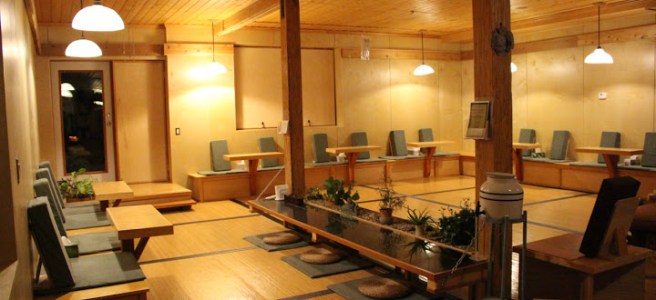
Birken is situated in a forest about 1 mile above sea level. It is the only green monastery. It has an incredibly beautiful wooden building with 3 meditation areas and a really nice kitchen. The house is full of windows from where you can see the hundreds of trees in the forest and the little animals that also live in the forest.

The coolest thing about it is that it is completely off grid and run by solar panels at a tiny fraction of the cost of running a home 5 times smaller. It is approximately 10,000 square feet and costs less than a dollar a day. Interesting design and planning such as motion sensor lights, low flow taps and showers, timed fans, insulated walls and wooden shutters, reduce the need for wood to heat the place.

Monks are not allowed to cook food and handle money, therefore the Monastery depends on volunteer staff to do so for them. In return they give the teachings of wisdom of the Buddha and support the growth and learning of the entire Sangha (community).

Buddhism is unlike any other theistic religion. There is no concept of a creator who magically solves anything. Even though Buddha relates his experiences of communicating with a deity, no belief is required or promoted. Buddhist monks only teach when asked to teach. Meditation is a core principle of the practice. It is so simple that it is easy to understand and put into practice quickly.

People come to meditation when they have tried everything else to deal with the suffering of being alive. Ultimately when nothing works, they are ready for the real thing. Before that, they look for external solutions (for example the sheikh/guru will fix it, dad needs to change, my brother is the problem, my mother did it to me, if I pray hard enough I will go to heaven, or donate to the mandir/religious place for my child’s problem etc). When people learn that blame or craving does not work, they look for internal solutions. The soul’s evolution i.e., real faith comes from within and it comes when we take action and fix the problems we have. It is about willingness to struggle and work hard at ourselves.

Buddha first and last was a scientist of the psyche and mind. He was a psychologist. Thus Buddhism is a ‘way’ like the ‘Taoist’ way. It is a path of the heart. There is ritualistic Buddhism in China and other places, where the Buddha’s statue is worshipped, decorated and used as a symbol of wealth and all the rest of it, but they don’t practice meditation. Birken is based on Theravada Buddhism. It originates from Sri-Lanka and there are Theravada Buddhist monasteries in Thailand and North America. They live in the forest, similar to how Buddha attained enlightenment and ended his suffering, then taught others.

In my last 8 years of honest practice I found over and over again, that every problem, began with me and ended with me. Every suffering I ever had was because of a wrong idea or belief about how life really worked or about how people really are. All my suffering was from fear and untruth. The moment I had insight the suffering ceased. Every time I put in effort, I was rewarded. Every time I lied to myself, I was slapped. Every time I avoided feeling what I truly felt, it didn’t benefit me, because it led to projecting my stuff on to other people. Every time I depended on others to give me love, I was depleted. Repeatedly, my path showed me the wisdom of loving kindness as a way to change the suffering from within and transcend inappropriate mental beliefs and limitations. The beauty of it was that it does not require belief or unbelief in anything. You can have any cultural or religious identity or ritual and still benefit from meditation and the four noble truths.

Mindfulness teaches people to become aware of being aware. It is a way to deepen awareness of being here in present moment consciousness. Thus there is no escaping what is. I recommend mindfulness based practices versus prayer because meditation is practiced as a way to know what is going on inside yourself versus methods that project on to a concept of a God. You can practice mindfulness, de-clutter your mind and feel relaxed and peaceful no matter what your beliefs are!. This is a no drama, no nonsense method to be as clear and as whole as possible.

And if you decide to go the whole way, the monk’s training is a path of direct realization versus prayer to an entity, thus it does not require identification to succeed in ending suffering. It is a more humble goal, rather than transcendence, or heaven with its requisite arrogance. When people meditate, sooner or later they do experience a feeling of divine presence, but that state is not an end in itself, it should not be an excuse to evangelize people or convince them of your religion. People can have all kind of transcendental experiences –but nobody should try to own god and become a ‘voice’ of authority vis a vis god. That’s emotional manipulation.

Fanatical belief can never be mentally healthy. It drives some people crazy, where they lose touch with what is appropriate or balanced in the desire to be ‘right’ or go to heaven or have a following.

Masters of spiritual circles are of often people with an incredibly strong ego (the benefits of the practice) and therefore quite hypnotic to others. When people are suffering, they are going around in a state of deep pain—very easily hypnotizable and some exploit the need for love–of-course that makes me upset. Then I have to study my reaction to it.

As a result I tend to be very careful about who and where I share my energy.
Birken is a an excellent place for peaceful meditation and healing. Ajahn Sona is a monk without an egoic need for a following or any prescription for how things ‘should be’. He is a very real human being with a great sense of humour. Despite his years of practice and genuine level of achievement, he wears his deep awareness with humility and empathy. It is so clear that his own practice is the purpose that drives him, and that makes him a very genuine and real guide. (birken.ca)

Values Based Politics vs. Posturing

When I see the covered up shadow figures on streets, I feel upset and dare I say it, almost violated, because my spiritual heritage is being used in, what I think, in an inappropriate way. It is being used to further a social and political agenda, that I do NOT subscribe with. I do not and can never believe in racial pride or one-upmanship. My spirituality is too sacred, too private and I feel too vulnerable about it to ever want to use as a political device or support its use as a political tool. I like how the pope is wearing his faith–he doesn’t say, ‘if you are catholic, then you must care about the environment.’ He is saying, ‘since you and I are human, it is high time to care about the environment and stop using the religion of Christianity as a political device. ‘

I wish such advanced thinking could spread into the Muslim diaspora. Instead of harping on their self identification and therefore victimization, if true leaders emerge who stand behind issues of grave importance, e.g., ‘non-violence or peace is important to us and we will chastise all imams who preach racism and bigotry as essential to being Muslim.’

Preachers who are Muslim, often focus on beliefs and quotations, rather than values and common ground. Teaching like this can only work to create a shaky moral ground for those people because they never face a challenge of being in a multi-cultural world–they need to be protected their whole life from the real world. The moment there is real challenge, such type of teaching fails, because it doesn’t create true faith. It is a mask of purity worn on top of inner sickness.

In the last while, there has been a rising phenomena of the black burqa, the tight head covered hijab and the niqab–a facial mask. Some even go as far as gloves on their hands, ostensibly because it is a requirement of the religious faith. That is not true. Hijab, Niqab or Burqa are cultural artifacts. There are so many different shades of muslim culture. In some cultures, gender discrimination is high. However, the idea of the religion was to elevate the status of women, not to downgrade them even further, unfortunately many muslim cultures don’t respect women, so women have to dress in a protective way.

I’ve lived in Vancouver for 15 years. I have taken buses at 2am at night. Stood on street bus stops. I have said whatever I felt like. I have raised a son who is comfortable with being all of who he is and claiming his space in a multi-cultural society-without losing anything of our original identity. I have worn skirts and I have worn big huge kurtas and saris, trousers and suits. I have worn a chadar over my head often–because it is so cold and scarves work. Nothing has ever created negative attention towards me. I have prayed in many different spiritual and religious centres, nobody has questioned my choices or whether I can be in their spiritual centre. I’ve been received as a fellow spiritualist. I love the open society and I find that my core values are mostly reflected in Canadian society.

The only time I’ve ever been made uncomfortable about my personal choices or who I am, has been among people who equate dogmatic belief with faith. Whereas belief and faith are not the same thing at all. Belief is about control, faith is about trust. They come from different areas of the spiritual heart. One is about protection, the other is about vulnerability. One gives guilt, the other expands you into growth.

Advertising a spiritual identity through a dress code in a free and open society is consumerism. It is branding…..here’s an example from a non-muslim context about what I mean.

The other day a dear friend of mine mentioned how a monk in downtown Vancouver called her over as he was gifting bracelets. She believed him and took a bracelet he offered. Immediately he wanted money. When she said, ‘sorry I thought you were gifting it, and I don’t have cash right now’–he grumpily took the bracelet away. That was exploitative of the brand image, ‘buddhist monk’. A con man exploited the teachings of the Buddha to make some money.

I care about my inherited values. They are inviolable. They are not a dress code or a name. My values are faith, gratitude, equality, honesty, justice and kindness. I can choose to call them Islam or not choose to equate them with a religion. I don’t have to make that choice ever. It isn’t important. The values are more important than the way I dress them up.

Some people will say, what option do we have, other than choose, given that Fox news and the mainstream media, keeps lumping ‘Muslims’ as people out to get the rest of the world?

One option is to create anti-racism awareness campaigns. The other option is to do nothing, i.e., become invisible and accept it.

There is a third option.  Stop seeing yourself as Muslim, start seeing yourself as human first, Canadian second and embrace the others that you see around you. Articulate your values. When people know your values, they can trust who you are as an individual. I firmly believe that is more important than one’s accidental birth religion or culture in post modern societies that are formed on ideals of equality, justice, honesty and faith.

Each individual is unique in their personal connection to God and it is their choice if they seek a religion or not. If there are foaming in the mouth angry people as Fox News describes, it won’t matter what Fox News says about them, they’d see it as an opportunity to recruit people. Fox News and republican/conservative agendas are plain stupid. I have faith that the large majority of people can see through that anyway and Muslims don’t have to worry about it. Even the pope and vatican supports Muslims!. When the Ahmed incident happened, the whole planet supported Ahmed’s right to make a clock and be treated like a normal child.

That’s so cool-and it proved the point that a free society works. But then, this whole incident was take up by the political islamists to push their hijab wearing rights and anti-racism campaign. I am okay with that also, some girls love their outfits a lot. But, what I am not ok with is aligning myself with right wing Islamists.

I speak for those people who care about values, not about dress codes and religion. We may be a tiny minority, but we are here.

We care for the real questions of concern of our times. We want those courageous leaders who can make a real difference, not this democrat vs. republican or conservative vs. liberal vs democratic, race based political posturing, in which the real issue–the environment and education are shoved under the carpet.